
Plant Galls
Rachelle Lapham, Anoka County Extension Master Gardener
Plant galls are abnormal growths or swellings that typically occur on the stem, roots, branches, or leaves of a plant. They fall into three major categories: insect, fungal, and microbial galls. These categories correspond to the causative agents of the galls with insect galls being the most common. It should be noted that gall-like structures can also occur if a plant is healing from an injury or growing around some type of occlusion or obstruction. For example, a tree can grow into and around a fence which is placed too close to it or a rock near the root crown, creating what is commonly known as a “burl.” We will not be covering these types of growths in this article and will instead focus on galls which result due to an interaction between the plant and another organism.
Insect galls are the most common form of gall that you will find in your garden or yard. They are usually caused by insect larvae whose saliva induce the plant to produce abnormal levels of growth hormones. This causes tissue to grow and swell in places it would not typically do so. The larvae will then live within the gall which acts as a form of protection as well as a food source. Insect galls can be caused by some species of wasp, mites, plant lice, aphids, or midges. These galls rarely cause severe damage to the plant and do not need any control measures. The number of galls can vary from year to year depending on factors such as local gall insect populations, weather, humidity, and temperature.
Fungal galls result from a fungal infection of plant tissue and typically occur on the stems or branches of plants. Two common fungal galls which occur in Minnesota are black knot and pine rust galls. Black knot fungus infects trees in the Prunus genus which include native, edible, and ornamental plum and cherry trees. These galls start out a velvety green and will eventually harden and turn black. If you have a tree infected with black knot, the best way to control the progression of the disease is to prune back the infected branches or tissue in late February or early March. Infected tissue should be burned or buried as that the galls cannot release spores to reinfect the affected or other neighboring trees. Pine gall rusts are caused by two types of fungi which require both pine and oak trees or multiple pine tree hosts to complete its lifecycle. These fungi will cause their host trees to form irregularly shaped galls with bright yellow to orange spores which can be found on the galls surface. These “rust” colored spots make them easy to distinguish from other types of galls. Control of pine rust galls is similar to black knot where infected branches or trees should be removed in late winter and then burned or buried to stop the spread of the spores.
Finally, galls can also be caused by microbes. The most famous and common example is crown gall disease, which is caused by the soil bacterium, Agrobacterium tumefaciens. This bacterium is an opportunistic pathogen, meaning that it will only infect an already wounded plant. Agrobacterium invades the host tissue and introduces proteins into the plant’s cells which engineer the infected plant tissue into an environment better suited to provide for the microbe’s needs. These galls overproduce the plant growth hormone, auxin, and continuously grow while also secreting food for the Agrobacterium. Typically, these galls occur at the interface between the base of the plant and the soil or “crown.” Over 600 species worldwide are susceptible to crown gall disease; however, infection is sporadic due to the opportunistic nature of the pathogen where conditions have to be “just right” for successful infection and gall formation to occur. In Minnesota, crown gall is mostly commonly found on rose species, willows, popular, and fruit trees. Protecting plants from damage at the crown or base of the stem or trunk should prevent the majority of potential crown gall infections. Most plants with crown gall disease can live for many years, but the gall will eventually cut off nutrient and water flow to other parts of the plant. If this happens, the plant may have to be removed.
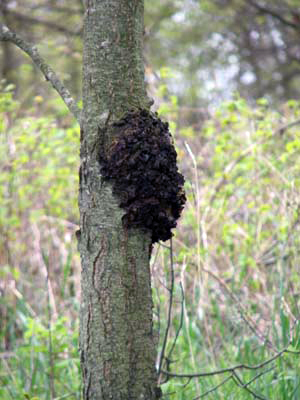
Black Knot Fungal Gall
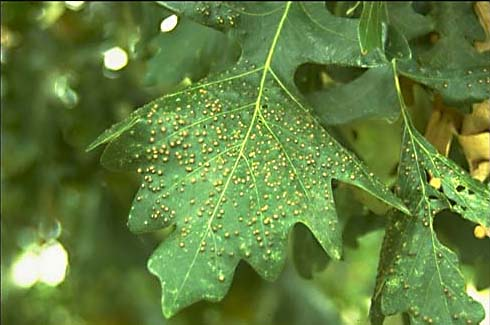
Jumping oak gall caused by cynipid gall wasps
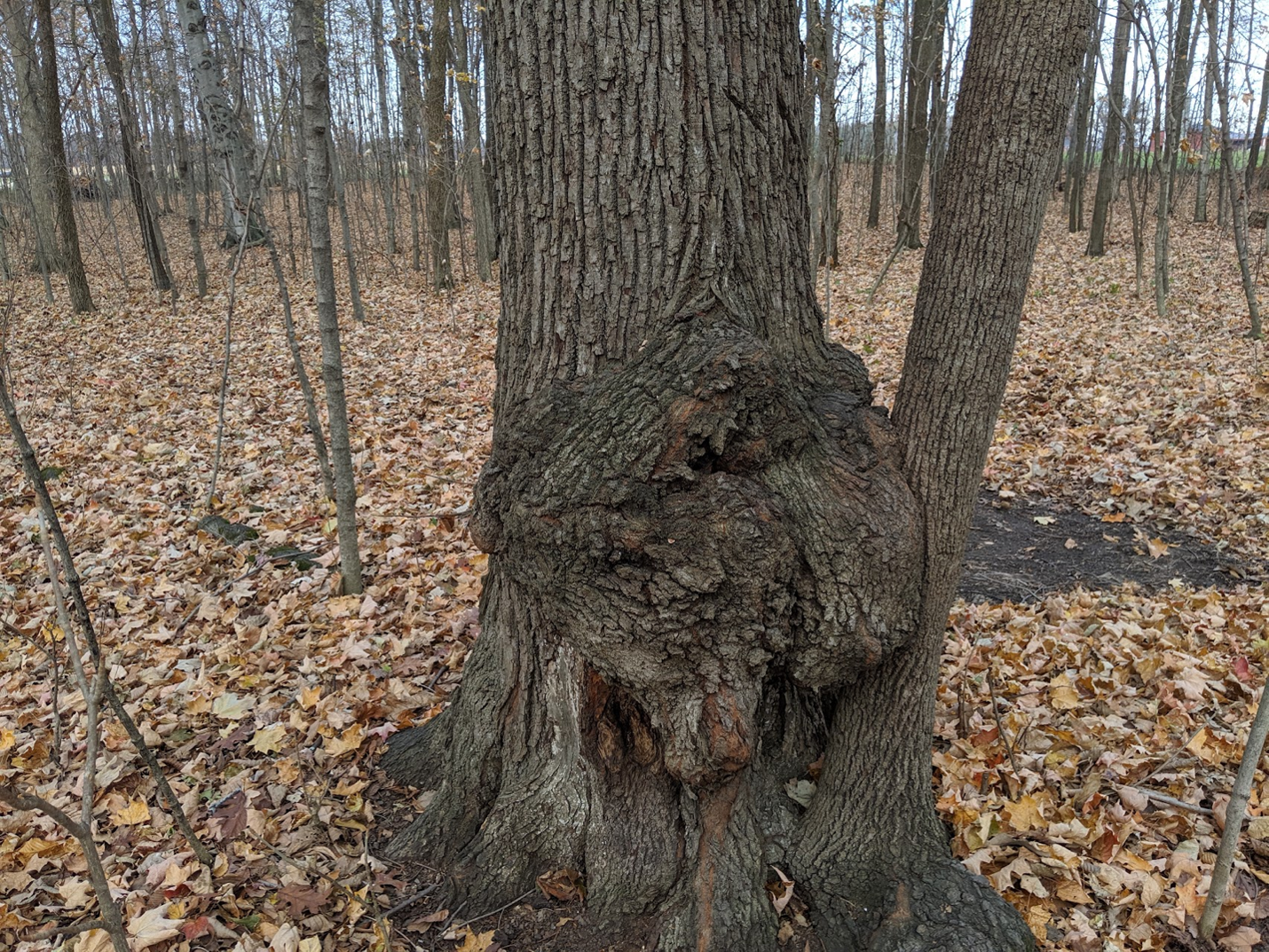
Crown Gall on Basswood